Allotment love by MaggieJo St John
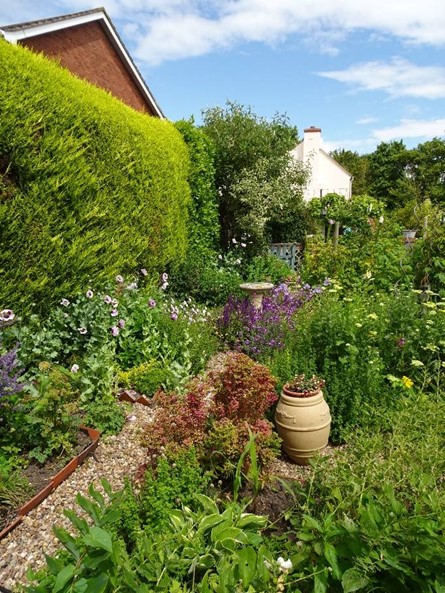
I’ve grown vegetables and fruit whenever I have had a bit of garden. Most exotically in Singapore where a papaya tree actually gave us our own fruit; most consistently in Birmingham until the lovely neighbouring park trees soared so high that my veg patch was shaded out and became more of a woodland habitat; most bizarrely here in Malvern where I use part of my small front garden for beans, corn on the cob, tomatoes….it’s the only south facing area so there’s no neat flower border for neighbours to admire; these edible delights are in full view!
And I have even more edible delights now that I have the immense pleasure of an allotment. I was allocated a plot in 2018; a full size one (200+sq m) became vacant and was divided in two. I misunderstood which was my half, was very happy with it as it was in relatively good condition and started putting down large quantities of cardboard to prevent weeds growing. When I realised my mistake I had mixed emotions: on the plus side I now inherited a shed, an overgrown fruit bush and even some chard, perpetual spinach and edible unharvested potatoes; on the downside I discovered that two thirds of it was heavily overgrown with rampant old raspberry canes and matted bindweed.
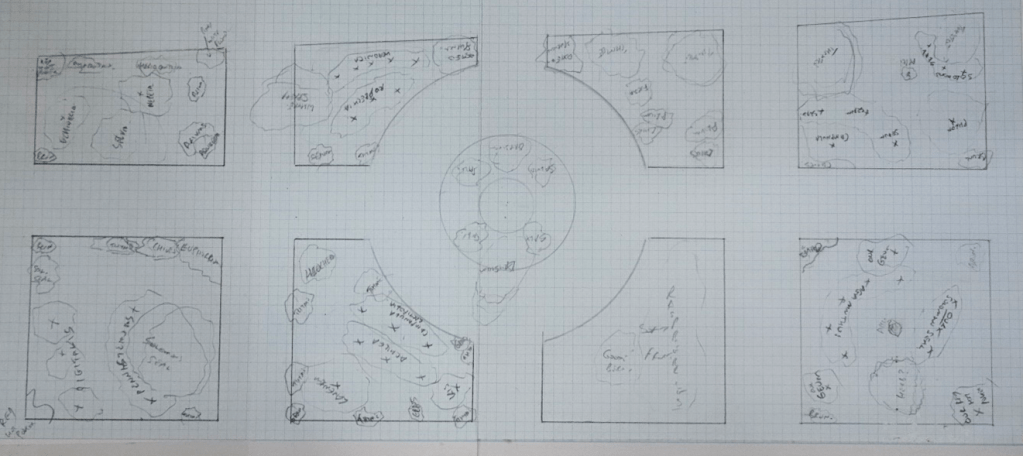
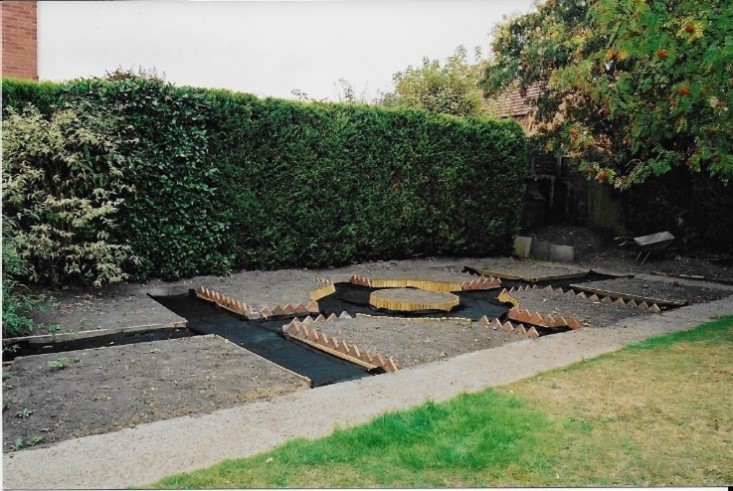
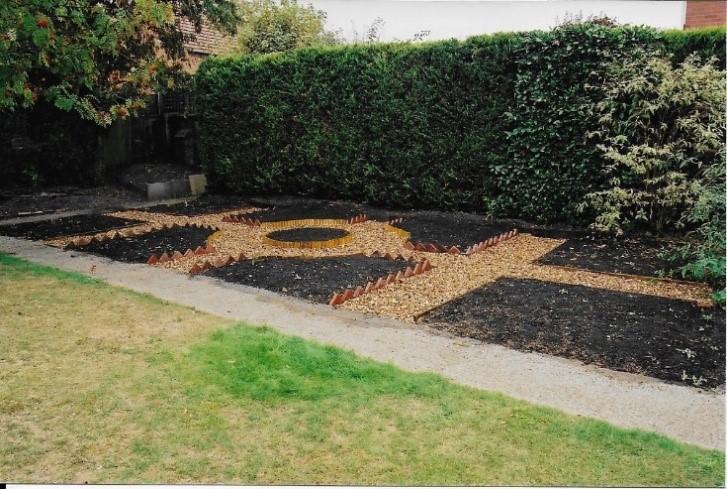
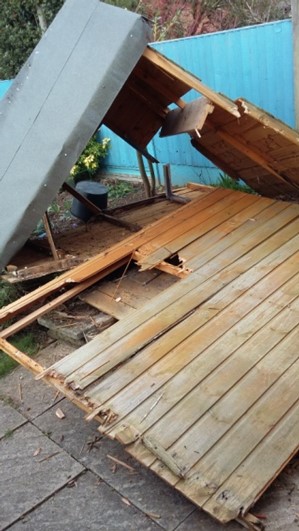
I gave myself three winters to eradicate all that, a third at a time. Now, in 2021, I can establish permanent areas for perennials such as rhubarb, an asparagus bed, new raspberry canes, some soft fruit bushes and a central strip of plants for pollinators. I was mapping that out on paper when, walking along Court Road in January, I cast my beady eye over a skip and spotted treasure! Long boards in good condition. A “help yourself” from the owner and 30+ one metre long flooring boards plus shorter ones were mine. With a third lockdown, there’s not been much to do; it’s too wet to walk the fields, let alone work the ground. Suddenly I had a reason to be down on the allotment on a regular basis: cobble the boards together and create paths and borders. To call them raised beds would be a misnomer as yet: I need, over the years, to build up sufficient layers of compost and manure before they merit that name.
I get immense pleasure from my allotment and was especially grateful to have one last year. Grateful too, unexpectedly, to Michael Gove who explicitly mentioned working on allotments as allowable activity in the first lockdown. I’ve wondered why I get such pleasure from it, more perhaps, certainly in a different way, than from my garden. Our gardens (if we have one) are mainly enclosed and private. For me, the allotment is a large open space where I have a sense of freedom: there’s no feeling that it should look good – it’s a place for practical, purposeful activity. Every plot is different, each allotment holder there for their own reasons yet all happy to pass the time of day and share ideas. Nowadays, few of us aim to be self sufficient and feed a family. We may want to grow organically, reducing the amount of chemicals we ingest or have space for a greenhouse or polytunnel so we can ripen cucumbers, grapes, pepper, melon, so many possibilities! Or just have more space and light.
While allotments have existed for hundreds of years, our current system stems from the nineteenth century when industrialisation left many labourers without access to land, unable to grow food to feed their families. The 1908 Small Holdings and Allotments Act placed a duty on local authorities to provide sufficient allotments and this was extended, after the First World War, and land was made available to all, not only the labouring poor.
I have a plot at Goodwood Road, a site that adjoins the railway line, owned and run by Malvern Town Council. Just as individual plots differ so too do the ways in which allotments are run with many now operating under devolved management schemes. There is a National Allotment Society (NAS) which supports members, be they individuals, societies, local authorities or others and champions the allotment movement. Taking on even a part size allotment is a substantial time commitment and can be a physical challenge. Sadly, we seem to love them so much that we hold on to them even when we cannot look after them properly and they become overgrown. At Goodwood Road this is the time of year when new people arrive to cast their eyes over a plot and assess whether its location, condition and aspect bode well. Some last a year or so, some will become the old stalwarts; some are enthusiastic beginners, some bring a wealth of experience; some live close enough to pop in daily, whilst others fit a visit around their work shifts; some of us raid skips for useful items, others invest money as well as time to create a special space. We all (mostly, most of the time) have a smile on our face.